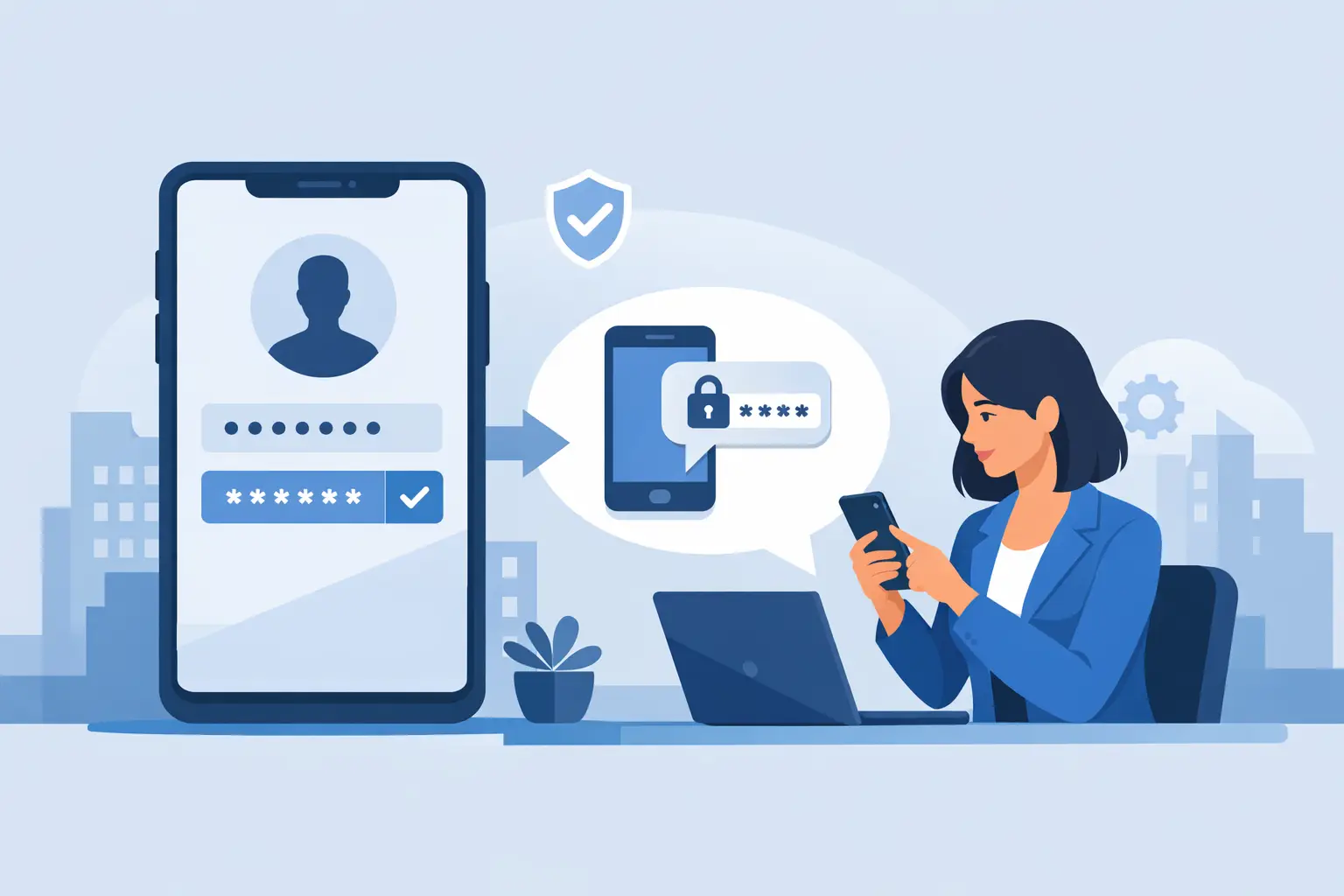
A client tries to log in, does not receive the code in time, and abandons. For many companies, this is where the loss begins - of conversions, trust, and sometimes control over fraud. This SMS code authentication guide is written for teams that need a simple system to launch, but solid enough for real volumes, real users, and real risks.
SMS code authentication remains one of the most used methods of identity verification. Not because it is perfect in every scenario, but because it is easy to understand, quick for the user, and relatively simple to integrate into applications, online stores, service platforms, and internal workflows. When implemented well, it reduces unauthorized access and increases the validation rate of numbers. When implemented hastily, it creates friction exactly where it should build trust.
What SMS code authentication means in practice
In the most common form, the user enters the phone number or login data, and the system sends a unique code, valid for a short period. This code, often called OTP, confirms that the user has access to the phone associated with the account. The process can be used for account creation, login, password reset, transaction confirmation, or validation of sensitive changes in the profile.
For a company, the value is not just in the code sent. The entire flow matters: how quickly the message arrives, how clear the text is, how long the code remains valid, what happens if the user requests a resend, and how suspicious attempts are handled. This is where the difference is made between a feature checked off on the roadmap and a security mechanism that supports business growth.
When an SMS code authentication guide is worth it
If you operate a platform where accounts have value - financial, operational, or data - SMS code authentication is worth serious evaluation. E-commerce uses it for customer verification and reducing fake accounts. SaaS platforms use it for login or recovery. Companies in services, logistics, fintech, or customer support use it for specific actions where quick confirmation is needed.
However, it is not a universal solution. For extremely sensitive data or environments with strict compliance requirements, SMS can be just an additional layer, not the only factor. There are known risks, such as SIM swap attacks or interception in certain contexts. Therefore, the correct choice is not just between using or not using SMS, but between positioning it correctly in the security architecture.
Real business advantages
The main advantage is the speed of adoption. Users already know how a code received on the phone works, so the learning curve is almost zero. They don't have to install a separate app or understand a new process. This matters especially in onboarding, where each extra step reduces conversion.
The second advantage is coverage. Almost any phone can receive SMS, making the method useful for varied customer bases, including segments where dedicated authenticators are not a realistic option. For companies operating in multiple markets, this compatibility simplifies the launch.
There is also an operational benefit: phone number verification. If you already communicate through transactional or marketing SMS, validating the number from the first interaction cleans your contact base and reduces wasted messages later.
Where problems most often arise
Most blockages do not come from the idea, but from execution. A code sent slowly is almost as bad as an unsent code. If the message arrives after 40 seconds, the user has already pressed resend twice or exited the flow completely.
The second problem is lack of clarity. Messages that are too long, codes hard to identify, and ambiguous wording increase the error rate. A good SMS for authentication is short, direct, and without unnecessary text. The user must see the code immediately.
The third problem is poor abuse control. If you allow unlimited code requests, you open the door to spam, unnecessary costs, and automated attempts. If you block too aggressively, you hit legitimate users. Balance matters.
What a good OTP flow looks like
A solid flow starts before sending the code. You check the number format, normalize the international prefix, and eliminate obviously incorrect data from the start. Then you send the code immediately, with a reasonable validity window - usually short enough for security and long enough for stress-free use.
The message should include the company name, the code, and ideally, its purpose. For example, it is different if the user is logging into the account or confirming a payment. Context reduces confusion and helps detect fraudulent attempts. If someone receives a code for an action they did not initiate, they should realize it instantly.
After sending, the interface should allow easy code entry, indicate the remaining time, and offer the option to resend after a controlled interval. Do not block the user without explanation. A simple and clear message reduces pressure on support and increases flow completion.
SMS code authentication guide: what to choose technically
For technical teams, choosing the provider and infrastructure is not just about price per SMS. You need stable delivery, good coverage in relevant markets, status reports, and a clear API integration. If your system relies on verification at critical moments, such as login or payment, error tolerance is low.
Flexibility also matters. Some companies only need OTP. Others want to combine authentication with transactional notifications, 2-way messaging or number verification before sending. In these cases, it is more efficient to work with a platform that can support multiple flows without parallel implementations.
For mature operations, it is worth analyzing additional features such as number existence and status verification, optimized routing, and monitoring by countries or operators. These details are not visible in a demo, but they directly influence cost and success rate at scale.
How to balance security with user experience
This is where many projects go wrong. If you set rules too relaxed, you increase the risk of fraud. If you set rules too strict, you penalize good users. For example, a very short expiration period may seem more secure, but in practice, it leads to repeated resends and frustration, especially on busy networks or in roaming.
Similarly, limiting attempts must be calibrated. Three or five attempts may be sufficient for most scenarios, but it depends on the value of the confirmed action. A regular login and a payment authorization do not have the same risk profile.
It is worth segmenting policies. For low-risk actions, keep a fast flow. For sensitive actions, add additional controls: device checks, risk scores, location-based rules, or secondary confirmations. SMS works better when it is part of a decision system, not the only filter.
What KPIs to track after launch
If you implement SMS code authentication, do not stop at the sending status. You need indicators that show what happens in the business, not just in the gateway. Track the average delivery time, code validation rate, resends per session, abandonment on the verification screen, and error distribution by operators or countries.
Also track the cost per successful authentication. It is a more useful indicator than cost per message because it links infrastructure to outcome. If you pay little per SMS but deliver unstably and lose conversions, the savings are only apparent.
For companies that also have fraud prevention as an objective, it is important to compare the incident rate before and after implementation. Sometimes, the best decision is not to send more codes, but to send smarter and block suspicious cases earlier.
How to choose a suitable solution for growth
If you have small volumes, almost any integration seems sufficient. Problems arise when the number of authentications grows, when you enter new markets, or when the flow becomes critical for revenues. Then you need quick support, simple configuration, clear monitoring, and the ability to adapt rules without cumbersome projects.
A good platform for business should not only send codes. It should reduce team workload, offer predictability, and allow expansion to other types of communication. Here a provider like SMSense can make sense for companies that want transactional messaging, number verification, and API integration in the same ecosystem, without unnecessary complications during onboarding.
SMS code authentication is not about ticking a security requirement. It is about building a contact point that must work quickly, clearly, and consistently, exactly at the moments when the user has the least patience. If you treat this flow as business infrastructure, not just as a sent message, you will make better decisions and avoid costs that you would otherwise see too late.