If you send the same SMS to 50,000 contacts, the cost per message may look good in the report. If the responses are weak, unsubscribes increase, and the campaign does not generate revenue, the savings are only apparent. Here arises the real question behind the topic of bulk messages vs personalized messages: which option brings results, not just volume?
For most companies, the answer is not black or white. There are situations where bulk messages are the most efficient choice and contexts where personalization radically changes the conversion rate. The difference is not just about the SMS text, but about the objective, timing, segmentation, available data, and the infrastructure through which you send.
Bulk messages vs personalized messages - the real difference
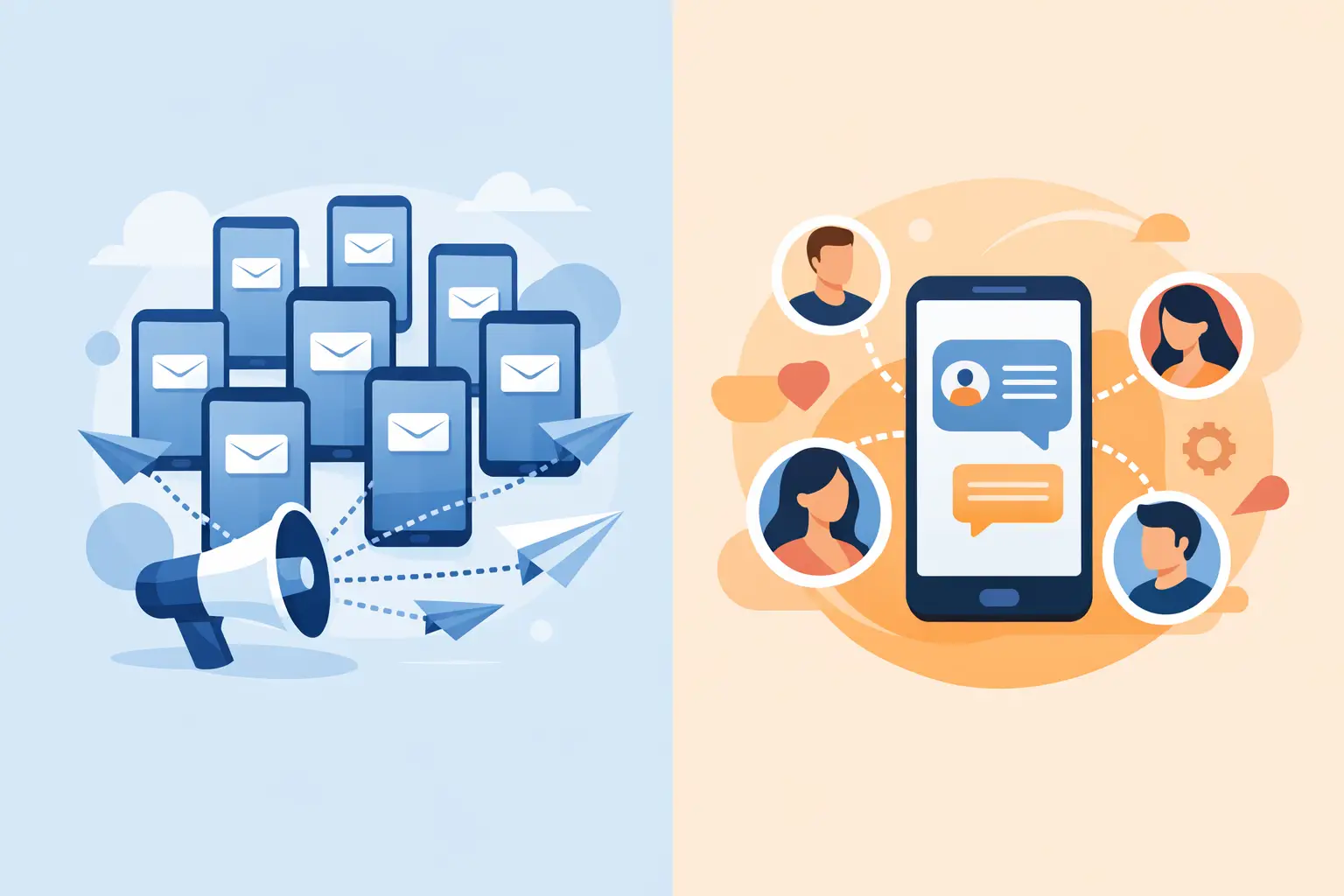
Bulk messages are sent in large volumes to a broad audience with the same content or minimal variations. They are useful when the information is relevant to many recipients simultaneously: a general promotion, a schedule announcement, an operational alert, an awareness campaign.
Personalized messages use customer data to tailor the content. Personalization can be simple, like including the first name, or much more valuable, such as a reminder for an abandoned order, a unique code, an offer based on purchase history, or a notification related to the user's account.
It's important not to confuse personalization with beautification. An SMS that starts with "Hi, Andrei" but continues with a generic message is not, in practice, personalized communication. Real personalization uses context and relevance, not just dynamic fields.
When bulk messages work better
Bulk messages are effective when speed and coverage matter more than nuance. If a retailer launches a weekend discount valid for the entire database, it makes sense to communicate quickly and uniformly. Similarly, if a company needs to announce a schedule change, a temporary interruption, or a maintenance window, the bulk message is simple, clear, and operational.
This type of communication has three obvious advantages. First, it scales easily. Second, it is prepared quickly, without complex segmentation logic. Third, it offers predictability in execution, especially for teams that need to launch campaigns quickly or manage large volumes.
But there are also hidden costs. When you send the same message to everyone, you assume that all have the same interest and the same purchasing moment. In reality, part of the audience is not ready, another has already purchased, and another part is no longer relevant for that message. The result can be a lower engagement rate and the gradual wear of the contact base.
When investing in personalized messages is worth it
Personalized messages perform better when the client's decision depends on context. A payment reminder, a booking confirmation, an OTP, a delivery notification, or an offer for recently viewed products have a much higher relevance rate than a generic campaign.
In e-commerce, personalization is often the difference between an ignored SMS and a click that turns into an order. In services, a well-timed message can reduce no-shows and increase responses. In digital products, transactional notifications and automated messages related to authentication, verification, or account activity need accuracy, fast delivery, and strictly relevant content.
Therefore, personalization should not be seen only as a marketing tactic. It is also a client experience issue, operational efficiency, and, in many cases, security.
What to choose based on the objective
If your objective is rapid reach for a widely applicable offer, bulk messages make sense. If you want better conversions from a specific segment, personalization will usually produce superior results. If the stake is delivering critical information, such as an OTP code or an account notification, the message must be personalized and integrated into a secure flow.
In other words, the correct question is not "which type of message is better?" but "which type of message fits the objective, data, and timing?"
For marketing campaigns, a mature approach starts with segmentation. You don't need dozens of message variants from day one. Sometimes it's enough to separate new customers from existing ones, active buyers from inactive ones, or users who abandoned the cart from those who have already completed the order. From that point, personalization starts to make sense and bring real efficiency.
Bulk vs personalized messages in practice
Let's take a simple example. An online store announces a discount campaign. The bulk version could be sent to the entire base with a general offer. The personalized version would divide the audience into segments: VIP customers, customers who haven't purchased in 90 days, users with products in the cart, and new subscribers. The message, offer, and timing of sending change for each group.
The first version is faster and cheaper to launch. The second requires data, logic, and automation, but can deliver higher revenue per message. Not in all companies does the difference justify the same investment. If the database is small and the offer is universal, bulk may be sufficient. If the volume is large and margins matter, personalization becomes much more profitable.
The same principle applies to customer care. A general alert about a national delivery delay can be sent bulk. An update about a customer's order, with status and estimated interval, must be personalized.
What matters more than the type of message
The quality of the data influences performance more than many marketers admit. If the contact base is old, unvalidated, or poorly segmented, even the best strategy does not fully compensate for the problem. Here come the processes behind sending: number verification, operator update, cleaning inactive contacts, and clearly defining consent.
Equally important is the infrastructure. A personalized message sent too late loses its value. An OTP that arrives late directly affects the login experience and can block the user. A bulk message that is not delivered consistently during peak traffic can compromise the campaign. Therefore, choosing the platform is not just a cost decision, but one of reliability, speed, and operational control.
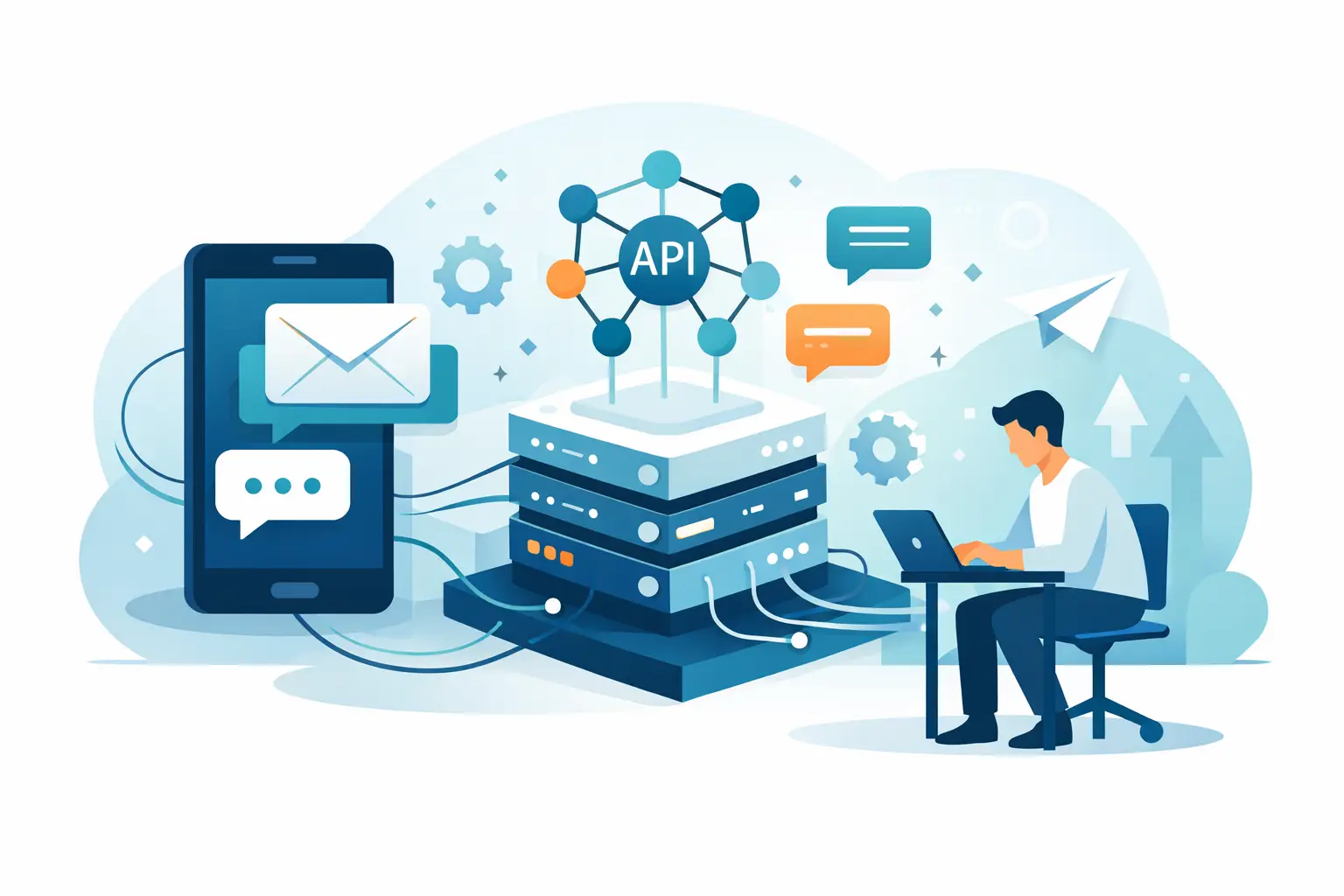
For teams that combine SMS marketing with transactional notifications and API flows, it matters to have the same technical base for campaigns, automations, and critical messages. This reduces complexity and helps teams work faster.
How to find the right balance
In many cases, the best strategy is not to choose exclusively one of the options. It is to use them together, in different roles. Bulk messages can support mass campaigns, launches, and announcements with general applicability. Personalized messages can take over the stages where individual response, conversion, retention, or account security matter.
A healthy approach starts simply. Send bulk where the message is universal. Personalize where you already have clear data and solid business logic. Measure results by segment, not just at the total level. Then gradually expand automation.
Here also appears the advantage of a platform that can support both quick campaigns for non-technical teams and API flows for developers. If you can easily launch a promotional campaign, but also integrate OTP, number validation, and automated messages in the same ecosystem, operations become more efficient. This is exactly the kind of flexibility companies seek when they want to grow without complicating their stack.
The mistake worth avoiding
The most costly mistake is not sending bulk. It is sending bulk when the data clearly shows that the audience has different needs. The second mistake is investing in superficial personalization and believing that you have solved the relevance problem.
Good messages do not start from the format. You start from the question: what should the recipient do after reading the SMS and what information do they need to act now? If the answer is the same for everyone, bulk is an efficient choice. If the answer differs depending on the client, personalization is the logical path.
In SMS communication, speed matters, but relevance decides the result. When you put them together correctly, you no longer choose between volume and performance - you achieve both.