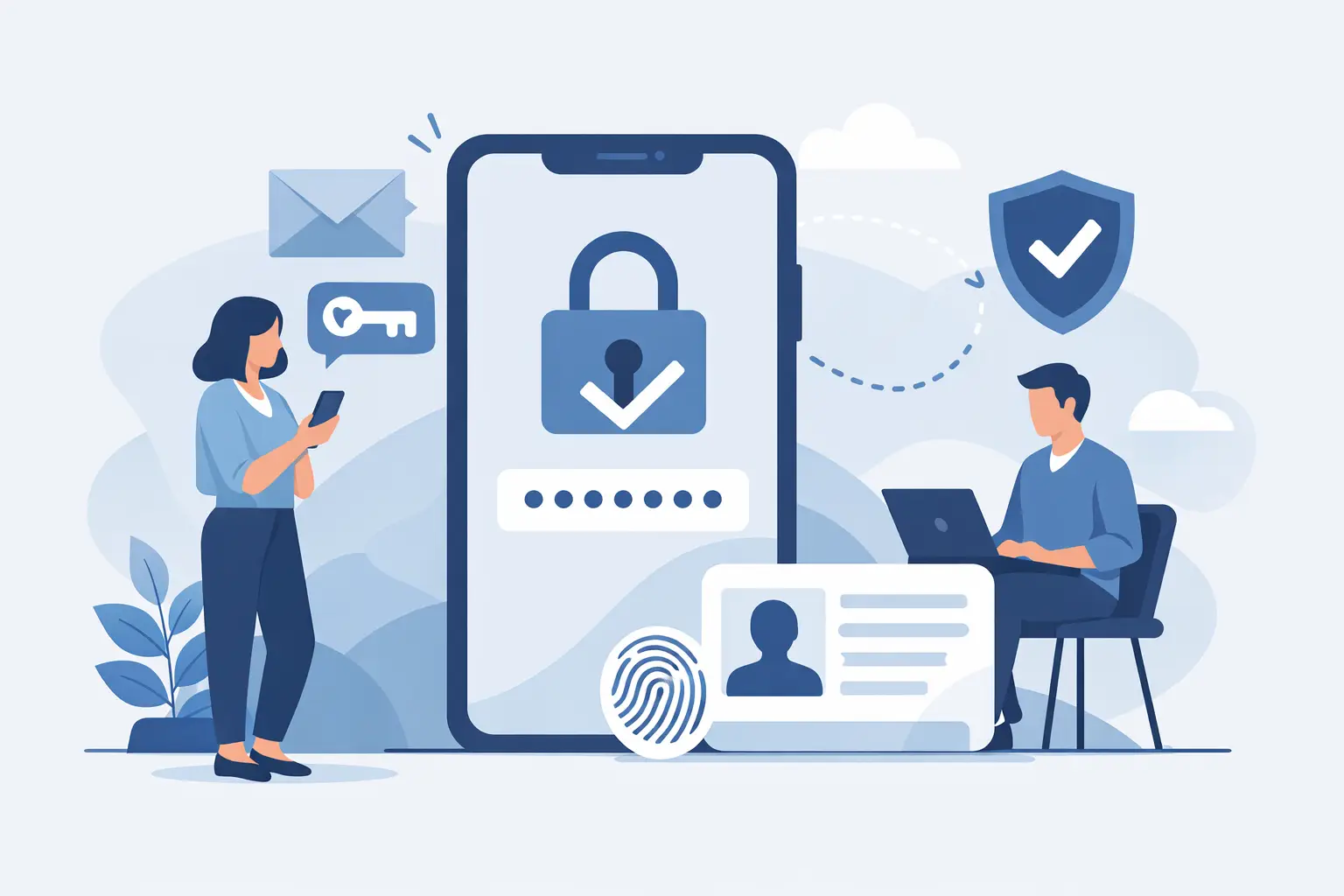
A user creates their account, enters their phone number, and receives a code. It seems like a small step, but a well-constructed OTP flow for onboarding can decide whether the process becomes quick and secure or if they abandon before activation. For product, e-commerce, and development teams, the OTP is not just a code sent via SMS. It is the point where security, message delivery, and customer experience must work together.
An efficient flow confirms that the number belongs to the user, limits the creation of fake accounts, and provides a clear way to continue. At the same time, it should not introduce unnecessary steps or block legitimate customers when network delays, typing errors, or device changes occur.
OTP flow example for onboarding, step by step
Let's take the case of an e-commerce platform that allows customers to create an account before their first order. The objective is simple: verify the phone number before the user can access account benefits, such as delivery notifications, order history, or personalized offers.
The flow starts on the registration screen. The user fills in their name, email address, password, and phone number. The application validates the number format before submission: the selected country, prefix, and number of digits must be plausible. This validation does not confirm the owner of the number, but it reduces requests sent by mistake to incomplete numbers.
After pressing the continue button, the application creates a verification request on the server. The server generates a random OTP code, usually six digits, associates it with the onboarding session, and stores it securely. It then sends the request via an SMS API to the messaging provider. The user immediately sees a clear message: “We sent a code to +40 7xx xxx xxx.” The partial display of the number helps them quickly notice any mistake.
The SMS message must be short and easy to identify. A suitable example is: “Your verification code is 482913. It expires in 5 minutes. Do not share it with anyone.” Do not include commercial information in the same message. An OTP has a transactional and security role, and direct wording reduces confusion and the risk of the user ignoring the code.
On the next screen, the client enters the received code. For a faster mobile experience, fields can allow automatic code completion when the operating system accepts it. After confirmation, the server compares the entered code with the value associated with the request, checks the validity period, and marks the number as verified. Only then does the account become active.
If validation succeeds, the user should be taken directly to the next relevant step: completing the profile, choosing preferences, or placing the first order. Do not ask for the same data again and do not display a success screen without direction. Onboarding has value when it leads to the first useful action in the product.
What happens when the code doesn't arrive
A correctly designed OTP flow does not assume that every SMS will be read instantly. Mobile coverage, operator filters, incorrectly entered numbers, or temporary delays can affect delivery. Therefore, the verification page should offer two simple options: resending the code after a controlled interval and changing the phone number.
The resend timer is essential. If the button is available immediately, a user can generate many codes in a short time, and the team ends up bearing unnecessary costs and greater exposure to abuse. An interval of 30-60 seconds is often sufficient, but the choice depends on the markets served and observed delivery times. Show the remaining time visibly, do not hide the restriction in a technical message.
With each resend, the previous code should be invalidated. Otherwise, the user may receive multiple messages and will not know which code is valid. Worse, simultaneously active codes increase the attack surface. The rule is simple: one active code for a single verification request.
For users who entered an incorrect number, the “Change number” option should be as accessible as resending. Returning to the form should not unnecessarily erase the name, email, or other already completed information. This small detail reduces abandonment, especially on mobile.
Security rules that support the experience
The OTP should not be treated as a permanent password. It is a temporary proof that the user can receive a message on that number, and its value depends on how it is generated, delivered, and validated. The code should expire quickly. Five minutes is a practical choice for many flows, but high-risk applications may apply shorter windows.
Also limit the number of validation attempts. For example, after five incorrect codes, the request can be temporarily blocked, and the user must request a new code. This measure reduces automated guessing attempts without excessively penalizing real customers.
It is recommended to apply rate limiting on multiple levels: by phone number, IP address, device, and session. A limit exclusively on IP is not sufficient, as mobile traffic or corporate networks can group legitimate users under the same address. A limit exclusively on the number can be circumvented by rotating numbers. The combination of signals provides more balanced control.
Do not send the code in logs, internal notifications, or API responses that reach the browser. On the server, store only the information necessary for validation and keep a clear record of events: code requested, message accepted for delivery, code validated, failed attempt, and account activated. These data help both in investigating incidents and optimizing conversion.
How to measure if the flow works
An OTP onboarding is not evaluated only by the number of SMS sent. Track the verification completion rate, the average time until account activation, the percentage of resent codes, and the failure rate in code entry. If many users request a second code, the problem may be delivery, message wording, or the number being entered incorrectly.
Segmentation matters. Analyze results by country, operator, device type, and app version. A good rate overall may hide difficulties in an important market. If you notice abandonment after the OTP page, also check the interface: is the code easy to enter, does the message say exactly what is happening, and is the option to correct the number visible?
For technical teams, a provider like SMSense can centralize OTP delivery via API and support transactional message monitoring at scale. For the business team, the advantage is more control over a critical moment in the customer relationship, without turning verification into a complicated project.
When SMS OTP is not the only choice
SMS is suitable when you need wide coverage and a flow that users immediately understand. However, it is not always sufficient as the sole security mechanism. For sensitive operations, such as changing bank details or resetting administrative access, additional verification through an authenticator, confirmed email, identity verification, or risk assessment may be required.
The decision depends on the balance between risk and friction. When creating an account for a newsletter, a too strict process may unnecessarily reduce conversion. When activating an account with personal data or payments, more careful verification protects both the company and the customer. Design the flow based on the real consequences of a fraudulent account, not just on what is easier to implement.
A good OTP does not draw attention to itself. The user receives the code, confirms it, and moves forward with confidence. If each stage is clear, fast, and controlled, onboarding starts the relationship with the customer exactly as it should: with security and without unnecessary effort.