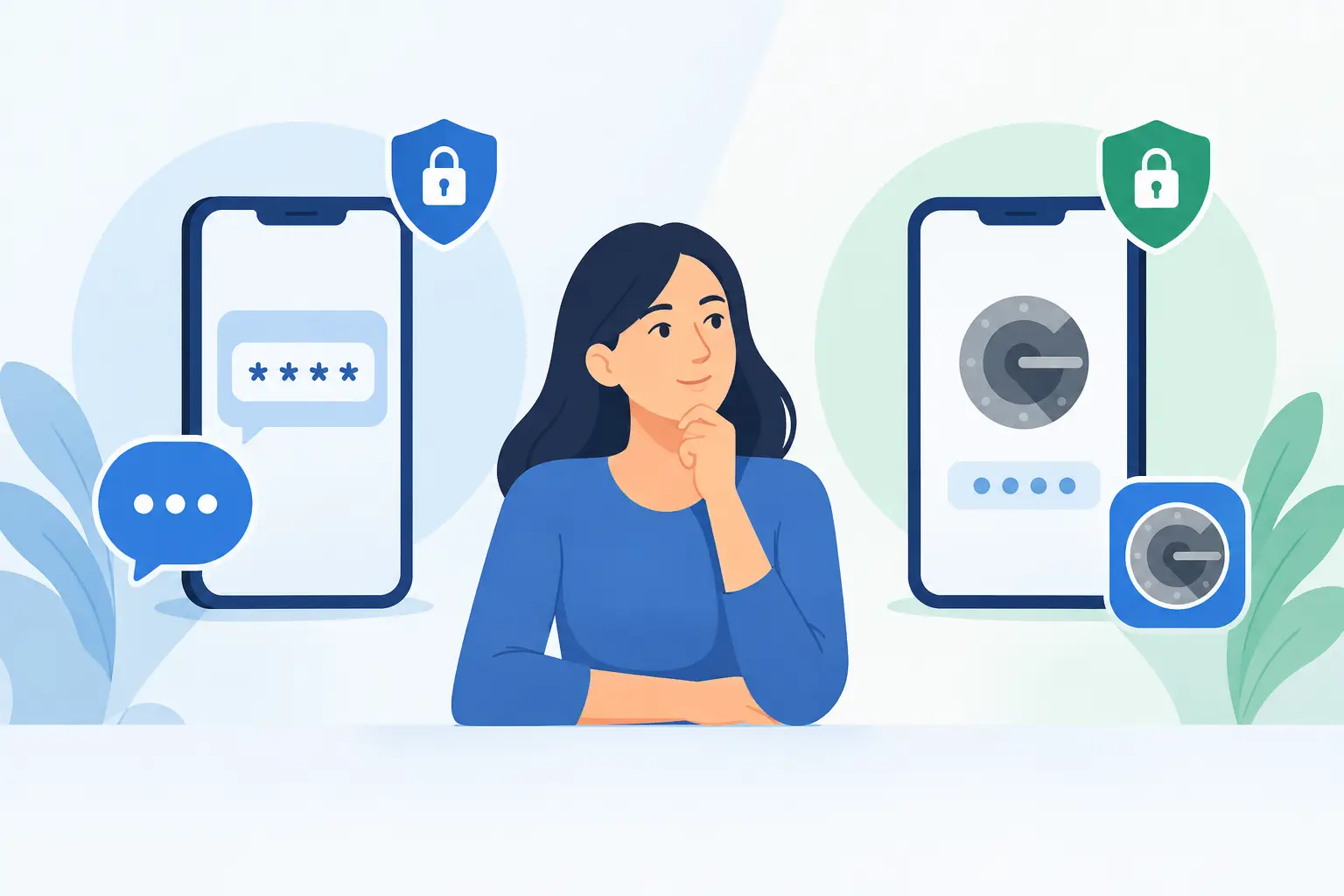
A client abandons a payment, a colleague cannot access their work account, or a reset password reaches the wrong person - all these situations can stem from the choice of authentication method. In the OTP SMS versus apps discussion, the decision is not just technical. It influences the conversion rate, support cost, exposure to fraud, and how easily clients can return to their account.
For many companies, SMS remains the fastest method to verify a phone number or authorize a sensitive action. Authentication apps, on the other hand, offer better protection against certain attacks and reduce dependence on the mobile network. The right choice depends on risk, audience, transaction type, and the team's ability to manage account recovery.
OTP SMS versus apps: the practical difference
An OTP via SMS is a unique code sent to the user's phone number. They enter the code into a form to validate access, a payment, a password change, or account creation. For the client, the process is familiar: they receive the message, copy the code, and continue. They don't need to install anything and don't require prior setup.
An authentication app generates temporary codes directly on the phone. In most cases, it uses a previously configured secret between the app and the online service. The code works even if the phone has no mobile signal or internet connection, as long as the device's time is correct. Some apps also offer push notifications for approval, but these have their own risks if users accept requests without verifying them.
The major difference is when friction occurs. SMS is simple at first use. The app requires an additional setup step, usually scanning a QR code and saving some recovery codes. For regular users, this step can reduce adoption. For employees, administrators, or clients with frequent financial operations, the initial effort may be justified by the higher level of protection.
When OTP via SMS is the right choice
OTP via SMS has a clear commercial advantage: coverage. Almost any phone can receive a text message, including simple devices, phones without space for apps, and many phones used temporarily while traveling. For number verification at registration, transactional notifications, or authorizing an order with moderate risk, this advantage directly impacts conversion.
It is an efficient option when launch speed is essential. A messaging platform with an API allows the product team to send, verify, and track OTPs without building their own telecom infrastructure. For non-technical teams, flows can be integrated with notifications about orders, delivery updates, and reactivation campaigns, keeping communication in a channel already familiar to the client.
SMS is especially suitable for:
- initial phone number verification;
- authentication of clients who do not frequently use dedicated apps;
- account recovery when the user no longer has access to the authentication app;
- quick confirmations for low or moderate-risk actions;
- markets and segments where compatibility with any phone is a priority.
However, delivery must be treated as a critical function, not just a simple message. The code must expire quickly, be usable only once, and have clear limits for retransmission and the number of attempts. Monitoring delivery, filtering invalid numbers, and using a suitable messaging route reduce delays that can turn a security flow into a source of abandonment.
The security limits of SMS
SMS is not immune to attacks. The most well-known risks are fraudulent SIM swapping, message redirection, and account compromise at the mobile operator. An attacker who manages to take over the number can receive access codes, even if they don't know the user's password.
There is also the risk of phishing. An OTP code should never be requested by call, email, or chat by someone claiming to represent the company. Authentication messages should clearly indicate the purpose of the code, not contain sensitive data, and warn the user not to share it. This simple wording reduces some fraud, but does not eliminate sophisticated attacks.
For high-impact actions - changing bank details, withdrawals, administrative access, or high-value transfers - SMS should not be the only barrier. Combine it with risk checks, device confirmation, transactional limits, or a more resilient method of authentication against number takeover.
Why apps offer additional protection
Authentication apps do not depend on message delivery and do not send the code through the mobile network. Thus, a SIM swap attack is not enough to obtain the temporary code. For privileged accounts, access to sensitive data, and internal teams, this advantage is significant.
But apps do not solve everything automatically. If the user is tricked into entering their password and code on a fake site, the attacker can use the information immediately. Also, losing or replacing the phone creates a recovery case that must be carefully designed. A reset process that is too simple can negate the protection offered by the app, while one that is too strict can block legitimate users and burden the support team.
For very high-risk levels, it is worth evaluating authentication based on access keys or hardware keys. These methods can offer better protection against phishing, but their adoption may require product changes, user education, and alternative options for exceptional cases.
How to choose the method based on usage
Not all accounts have the same value and not all actions justify the same friction. An e-commerce platform can use OTP SMS for number validation at checkout and for order updates, then require stronger verification for changing the delivery address or payment method. A B2B app may require an authentication app for administrators but can keep SMS as a controlled recovery method for standard users.
View the decision through four criteria: how severe unauthorized access would be, how varied the audience is, how frequently users authenticate, and how much the company can handle as a volume of recovery requests. If access is occasional and the audience is broad, SMS can offer the best balance between security and flow completion. If users log in daily to a system with confidential data, the authentication app becomes a logical investment.
The cost must be calculated completely. SMS has a cost per message and can generate retransmissions. Apps reduce this recurring cost but require implementation, onboarding, support for changed phones, and recovery processes. The cheapest channel at the message level is not necessarily the most economical if users abandon or open many support tickets.
A mixed strategy reduces friction without ignoring risk
In many organizations, the answer to OTP SMS versus apps is not "one or the other." A tiered strategy allows the use of each method where it produces the best results. SMS can cover registration, number verification, and controlled recovery, while the app can protect administrator access, critical settings, and high-value operations.
Implementation needs clear rules. Set the code's validity duration, attempt limit, interval between resends, and the threshold at which unusual activity triggers additional checks. Keep audit logs for important events without storing codes in plain text. Verify the quality of contact data before sending, as a recycled, inactive, or incorrectly entered number can create both costs and risks.
A solution like SMSense can support the operational side of OTPs through messaging APIs, number verification, and delivery monitoring, allowing the team to better control the authentication experience without directly managing telecom complexity.
Choose the method that protects the action, not just the account in theory. Start with flows where delays, fraud, or abandonment already cost you money, measure results, and adjust the verification level based on real user behavior.